Repair or Replace Hot Water System? How to Know When It's Worth Fixing
The shower runs cold on a Tuesday morning. Or a damp patch turns up on the floor beside the tank, and the same question lands either way, is this a quick fix, or is a whole new unit about to become an unexpected expense?
Deciding whether to repair or replace a hot water system comes down to four things a plumber checks on site, and none of them involves guesswork. Plenty of hot water faults are a straightforward repair on a unit that has years left in it. Others are a sign the tank has done its dash, and no amount of parts will bring it back.
Hot water makes up a solid share of the week at Down to Earth Plumbing Maintenance, where Matt has been repairing and replacing units across Lake Macquarie since 2010, backed by a trade career that started in 2001. His answer changes with the job. Sometimes it is one part, sometimes it is the whole unit, and either way, you deserve to be told which one you are looking at.
Should You Repair or Replace Your Hot Water System?
Repair usually makes sense when the unit is still inside its expected working life, and the fault sits in a serviceable part, such as a thermostat, a heating element, a tempering or relief valve, an anode, or a leak at a pipe fitting. Those are all replaceable, and swapping one out on a sound tank is ordinary maintenance rather than a major spend.
Replacement is usually the smarter call when the tank itself is leaking or badly corroded, when the unit is at or past its expected lifespan, when the same fault keeps returning, or when parts for the model are no longer available. Where the cause is not obvious from the symptoms alone, that call gets made after a proper hot water diagnosis
on-site rather than from guesswork.

The 4 Things That Decide It: Age, Fault, Cost & Parts
There is no single rule that settles every hot water job, but there is a sensible order to think it through. These are the four things Matt weighs up before giving anyone a recommendation, and they tend to point in the same direction once you line them up.
How old is the unit?
Age colours everything else. An electric storage unit has a typical working life, and where yours sits on that timeline changes what a fault actually means. A failed part on a young system is almost always worth repairing, because the tank behind it still has plenty of service left.
That exact same part failing on an ageing hot water system is a different conversation, since whatever gets replaced today is bolted to a tank that may not see out the year.
What has actually failed?
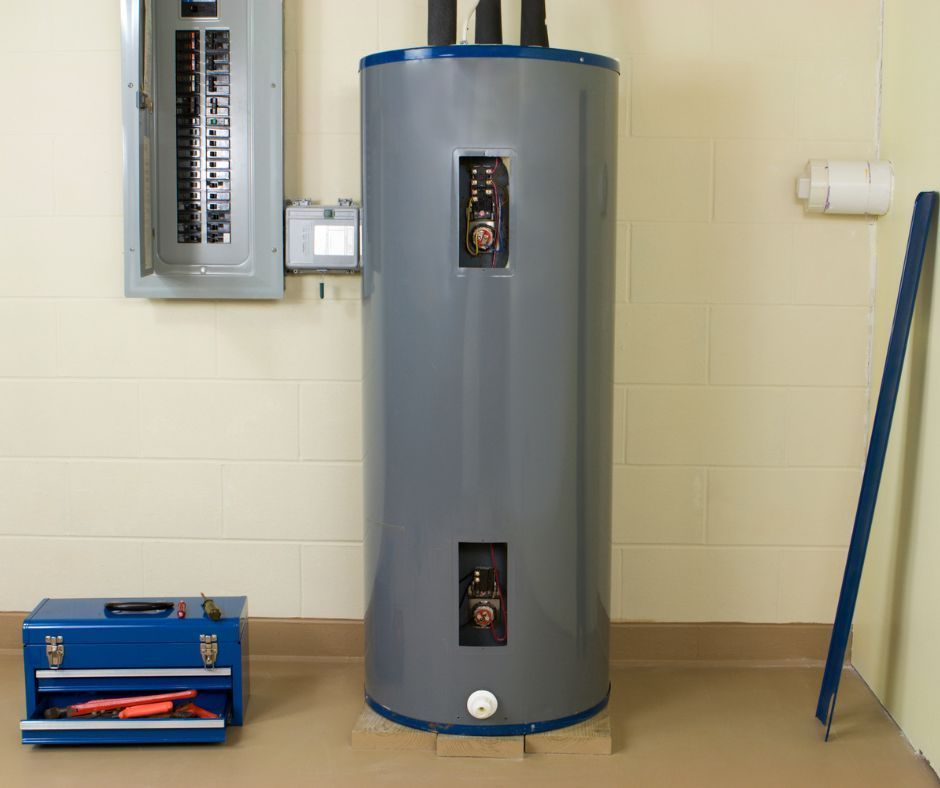
This is the question that decides most jobs, and the principle behind it is simple, nearly every component on a hot water system can be replaced except the tank. Thermostats, elements, valves, off-peak connections and a sacrificial anode are all serviceable items. Once the tank itself has corroded through from the inside, though, the unit is finished, because there is no repair for a steel vessel that has rusted out.
| Usually Worth Repairing | Usually Time to Replace |
|---|---|
| Faulty thermostat | Tank leaking from the body itself |
| Failed heating element | Heavy internal corrosion or rusty hot water |
| Worn tempering or relief valve | Unit at or past its expected lifespan |
| Spent anode caught in time | The same fault returning again and again |
| Leak at a pipe fitting or connection | Parts no longer available for the model |
What will the repair cost be against a new system?
The honest rule of thumb is about proportion, not a fixed dollar figure. When a repair on an older unit starts climbing toward a meaningful share of a new system installed, replacement is generally the better long-term spend, particularly if a couple of other components are heading the same way.
Spending money on an old tank twice in one year is the outcome nobody wants. Worth knowing too that water heating is the second largest slice of household energy use in Australia, so a replacement that suits the household properly keeps paying for itself long after the invoice.
The cost of repairing a hot water heater shifts depending on which component has failed and whether parts are still easy to source, so the comparison is worth doing on real numbers rather than a rough guess.
Can you still get parts?
Older and discontinued models can be difficult, slow or simply uneconomic to source parts for. When a component is obsolete, even a minor fault can force a replacement, which catches people off guard because the problem itself sounds so small. Matt checks parts availability before recommending anything, and he will say plainly when a unit has reached the point where keeping it going stops making sense.
When Repairing Is the Right Call
A cold shower feels like a disaster, but plenty of hot water faults are an ordinary repair on a unit that is otherwise sound. Jumping straight to a full replacement on a system with years of service left is how people end up spending far more than the job called for.
The faults that are usually just a repair
Valves are a good example. A worn tempering valve or a weeping relief valve will cause real symptoms, such as water that is too hot, water that is not hot enough, or a persistent drip, and all of them are replaceable items on a healthy tank. Leaks are much the same, because a leak at a fitting or connection is a repair, while a leak from the tank body is not. Sediment buildup in the bottom of the tank also causes rumbling and reduced efficiency without meaning the unit is finished.
Where an electrician comes in
Being upfront about scope matters here. A heating element fault or a failed electrical wiring is one of the most common reasons an electric system stops producing hot water, and that work belongs with a licensed electrician rather than a plumber. Matt is licensed in plumbing, drainage and roofing, so he identifies the fault, explains what has happened, and handles everything on the plumbing side. Knowing which trade you actually need saves a wasted call-out.
Catching the anode in time
Every storage tank has a sacrificial rod inside it that corrodes on purpose so the tank does not. Replaced at the right time, it is a modest job that can add genuine years to a sound unit. Left too long, the tank starts corroding instead, and by then, a new rod cannot undo the damage. The signs that an anode needs replacing are worth knowing before that point arrives.
When to Replace a Hot Water System Rather Than Repair It
Some hot water faults are genuinely beyond repair, and spotting them early saves both money and mess. Knowing when to replace a hot water heater is less about a single dramatic failure and more about recognising a handful of clear signals. None of these requires a second opinion, and all of them point the same way.
The tank itself is leaking
Water pooling under the unit or weeping from the body of the tank is the clearest replacement trigger there is. Fittings and valves can be repaired, but a tank that has rusted through cannot be patched in any way that lasts. A leaking hot water system rarely improves on its own, so shutting off the supply to the unit and having it assessed quickly is what limits the damage to the floor and anything stored nearby.
Rusty or discoloured hot water
Discoloured water that shows up only on the hot tap, and runs clear on the cold, generally points to hot water tank corrosion rather than anything in the mains supply. That combination usually means the anode is long spent and the inside of the tank has started to go. Once rust is coming out of the outlet, the unit is telling you it is near the end.
The same fault keeps coming back
One failed component is a repair. The same problem returning every few months on a unit well into its years is a pattern, and paying for it repeatedly costs more than replacing the system outright. Parts that fail in sequence are usually a sign that the whole unit is winding down rather than suffering isolated bad luck.
Matt's Tip: A corroded tank rarely gives much warning before it lets go, and there is no good time for a hot water unit to empty itself into a garage or laundry. Replacing one that is clearly on its way out is a far calmer exercise than dealing with it as an emergency, and it means you choose the timing rather than the tank choosing it for you.
Replacing Near the Coast: Salt Air, Rust & Smart Positioning
Where a home sits matters more than most people expect. Around Swansea, Caves Beach, Belmont and the rest of the lake and coastal suburbs, salt air is part of daily life, and it is hard on hot water tanks.
Why salt air shortens tank life
Salt in the air accelerates corrosion on the outside of a unit, particularly around the base, fittings and casing. Two identical systems can post very different lifespans depending on how exposed they are. It is one of the reasons Matt tends to install Rheem, which offers a strong warranty backing and a stainless steel option that stands up far better to salty conditions than a standard enamel-lined tank.
Getting the new unit off the ground
Positioning is the other half of it. A unit sitting directly on concrete or soil stays damp underneath, and that is exactly where rust takes hold first. Raising a replacement off the ground and relocating it out of the worst of the weather is standard practice on Matt's installs, and it is a small decision at install time that pays off years later.
What to Ask Before You Agree to a New Hot Water System
Anyone can be talked into a replacement they did not need, and older customers get targeted for it more than most. A few straight questions will tell you quickly whether the person in front of you is being upfront:
- Is the tank actually gone, or is this a replaceable part? The answer should be specific about what failed, not vague about the unit being old.
- Can you still get parts for this model? If the answer is no, that is a legitimate reason to replace. If it is yes, ask what the repair would involve.
- Is the new unit the right size for this household? Matching whatever was there before is not the same as sizing it for how the home actually uses hot water.
- Can I get the cost broken down before you start? Call-out, labour and materials should all be clear in advance.
Matt works this way as a matter of course. Larger jobs, like a full replacement, come with a free quote, straightforward maintenance gets a price over the phone, and anything he can see heading for trouble gets flagged early so it can be budgeted for rather than sprung on someone later.
Making the Call on When to Replace a Hot Water System
The choice to repair or replace a hot water system is rarely as murky as it feels standing in a cold shower. Line up the age of the unit, what has actually failed, the cost against a new system, and whether parts are still available, and the sensible answer usually presents itself. Sometimes that is a straightforward repair. Sometimes it is a new unit, and knowing which is which is what stops good money from going after bad.
If hot water has stopped behaving and you would rather have someone look properly than guess, Matt can assess it and give you an honest recommendation either way. Give him a call on
0422 131 555 or get in touch to book a time.
Key Takeaways
- Almost every component on a hot water system can be replaced except the tank, so once the tank leaks or corrodes through, the unit needs to be replaced.
- Four factors decide it: the age of the unit, what has actually failed, the repair cost against a new system, and whether parts are still available.
- A faulty thermostat, failed element, worn valve or a spent anode caught in time are usually repairs, not reasons to replace the whole system.
- Rusty water coming only from the hot tap, or water weeping from the tank body, generally points to internal corrosion and a unit near the end of its life.
- Salt air along the Lake Macquarie coast shortens tank life, so a stainless steel unit raised off the ground is worth considering at replacement time.
- An honest plumber will tell you when a repair is the better spend and when it is throwing good money after bad.
Frequently Asked Questions About Repairing or Replacing a Hot Water System
Is it cheaper to repair or replace a hot water system?
It depends almost entirely on the age of the unit and what has failed. A serviceable part on a system still within its working life is nearly always cheaper to repair, and replacing the whole unit in that situation is money spent for no real gain. Once repairs start stacking up on an older tank, or a single repair climbs toward a decent share of a new system installed, replacement becomes the better value option. The cost to repair a hot water heater comes down mostly to which part has failed, and how long the job takes, so a single valve and a full element replacement sit at very different points.
When should you replace a hot water system instead of repairing it?
Knowing when to replace a hot water system comes down to four situations. Replace it when the tank itself is leaking or corroded through, when the unit is at or past its expected lifespan, when the same fault keeps returning despite repairs, or when parts for that model are no longer available. Any one of those on its own is a reasonable basis for replacement, and two or more together make it fairly clear-cut.
How long does a hot water system last in Australia?
An electric storage system has a defined working life rather than an indefinite one, and how long yours lasts depends on water quality, how heavily the household uses hot water, whether the anode has been maintained, and how exposed the unit is to the weather. Coastal homes generally get less out of a tank than inland ones because of salt air.
Why is my hot water rusty or discoloured?
If the rusty water only appears on the hot tap and the cold runs clear, the problem is almost certainly inside the tank rather than in the mains supply. It usually means the sacrificial rod has been spent for some time, and the steel of the tank has begun to corrode. That is a strong indication that the unit is approaching the end of its life, so it is worth having it assessed before it fails outright.
Can a leaking hot water system be repaired?
That depends entirely on where the leak is coming from. A leak at a pipe fitting, connection, tempering valve or relief valve is a normal repair and does not mean the unit is finished. Water weeping or pooling from the body of the tank itself is a different matter, because a corroded tank cannot be repaired in any lasting way, and the system needs replacing.
Does a plumber or an electrician fix a hot water system?
On an electric storage system, it can be either, depending on the fault, which is why an accurate diagnosis matters first. A heating element fault, a failed thermostat or anything involving the wiring and electrical supply is work for a licensed electrician. Leaks, valves, the tank, and installing or replacing the unit itself are plumbing work. Matt is licensed in plumbing, drainage and roofing, so he diagnoses the fault, tells you which trade you need, and handles the plumbing side.
Is it worth replacing the anode instead of the whole system?
If the tank is still sound, yes, and it is one of the better value jobs in hot water maintenance. A fresh sacrificial anode takes over the corrosion that would otherwise attack the tank, which can add real years to a unit. The catch is timing, because once the tank has already started corroding a new rod cannot reverse it. The signs an anode needs replacing are worth watching for.
What size hot water system should I replace mine with?
Size it for how the household actually uses hot water rather than simply matching whatever was there before, especially if the number of people in the home has changed. Australian Government guidance puts average use at roughly 50 litres of hot water per person per day, which is a useful starting point before factoring in shower habits and whether everyone is getting ready at the same time. Matt asks about all of that before recommending a size, and the guide to choosing the right hot water system size goes through it in more detail.
Should I replace my hot water system before it fails completely?
If the unit is old and already showing corrosion, planning the replacement is usually the better move. A tank that lets go does it without much warning, and dealing with that as an emergency means water through the garage or laundry and a rushed decision on the replacement. Replacing it on your own timing means you choose the unit, the position and when the work happens.
Do you offer a discount on hot water replacements?
Larger jobs, like a full hot water replacement, come with a free quote, so you know the cost before anything starts, and simpler maintenance jobs can usually be priced over the phone. NSW Seniors Card holders receive 10% off plumbing labour. Give Matt a call on 0422 131 555 to talk through what your unit needs.

Recent Posts